Northeastern University EXP Building
Project
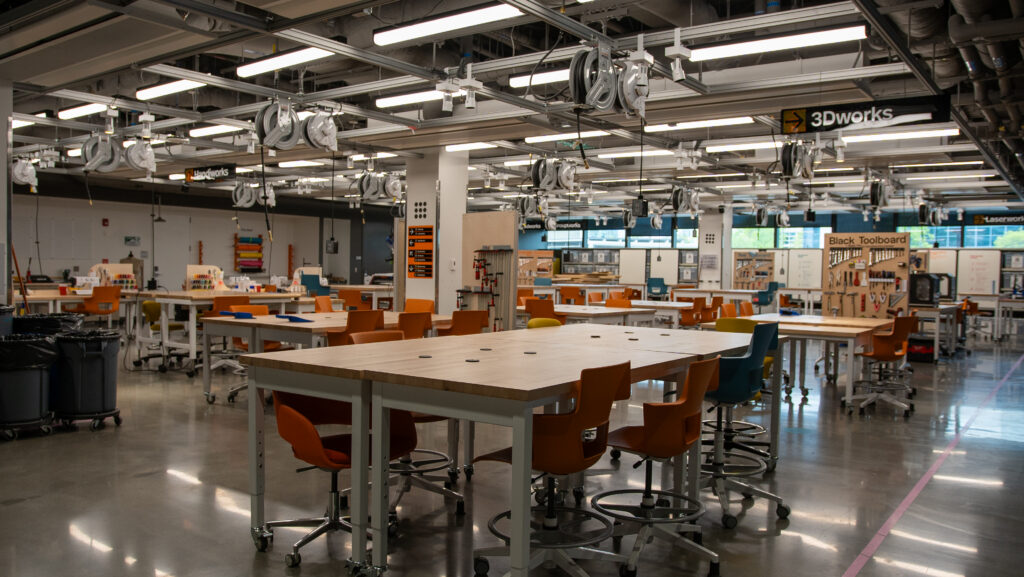
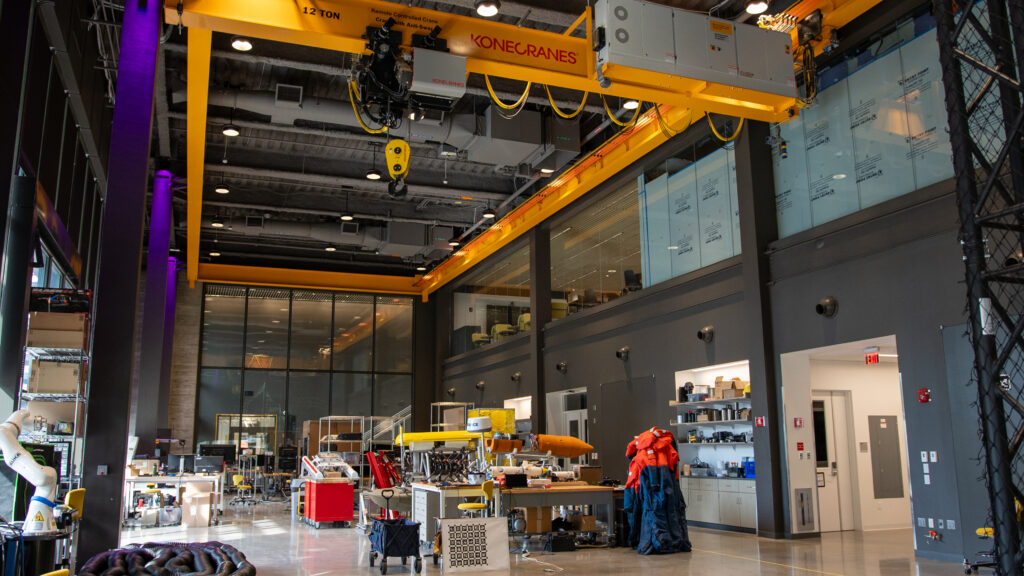
The Northeastern University EXP Building is a 12‑story, 357,000‑sf research, engineering, and teaching facility designed for maximum flexibility. It includes complex architectural geometry, collaborative STEM spaces, advanced robotics labs, and a 15,000‑sf makerspace. The project required a fully integrated, highly coordinated electrical installation to support its advanced academic and research functions.
Project Scope
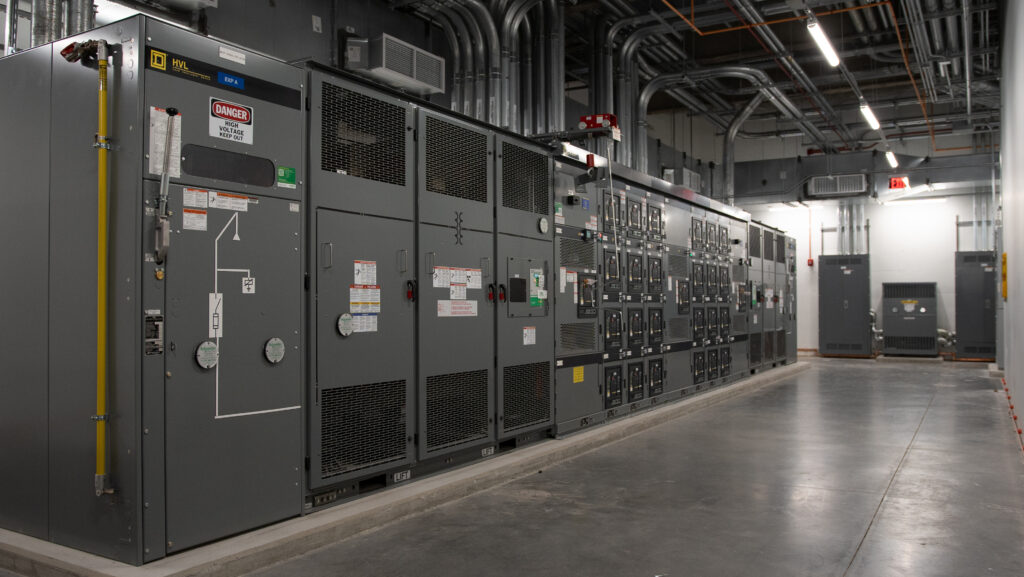
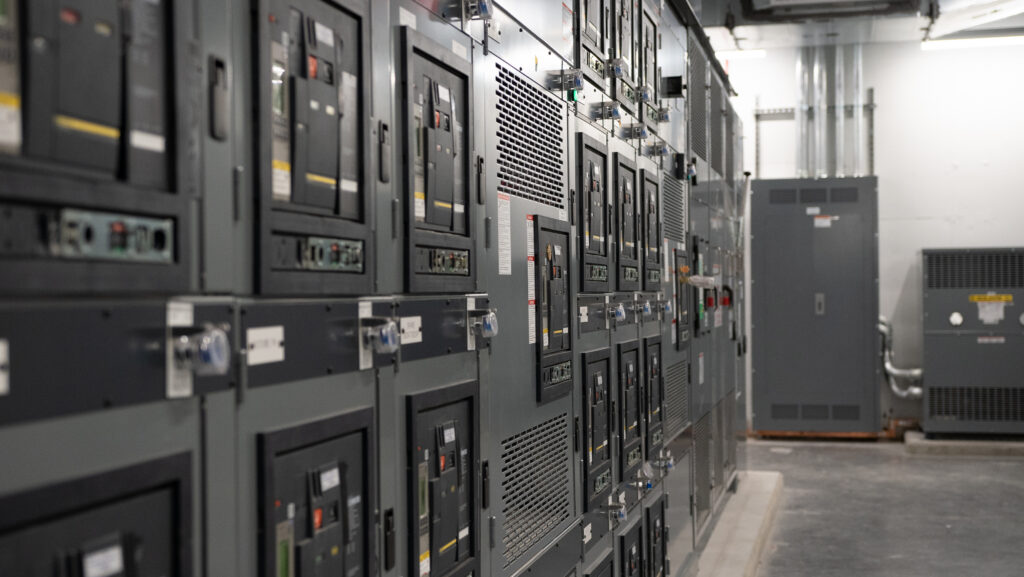
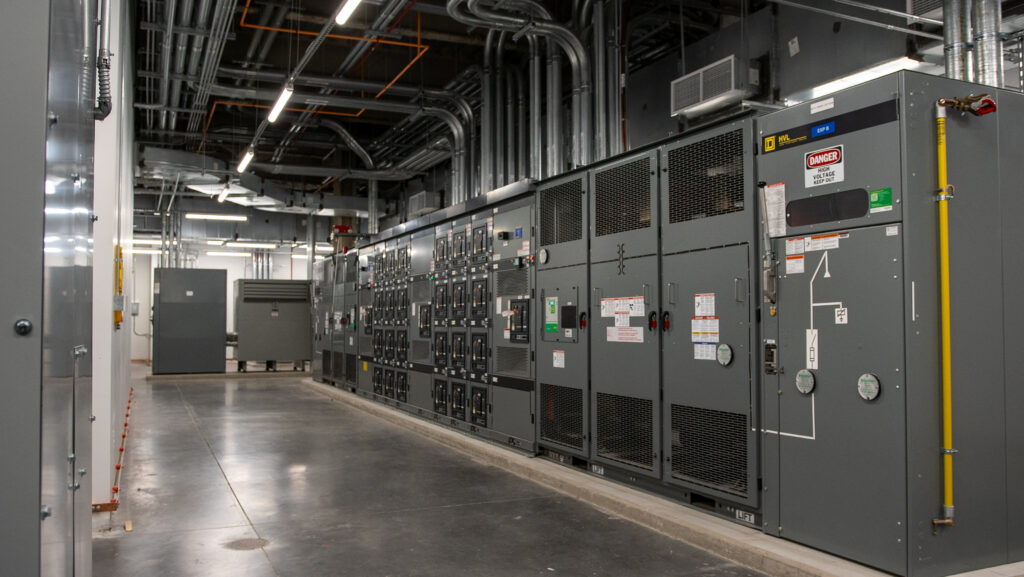
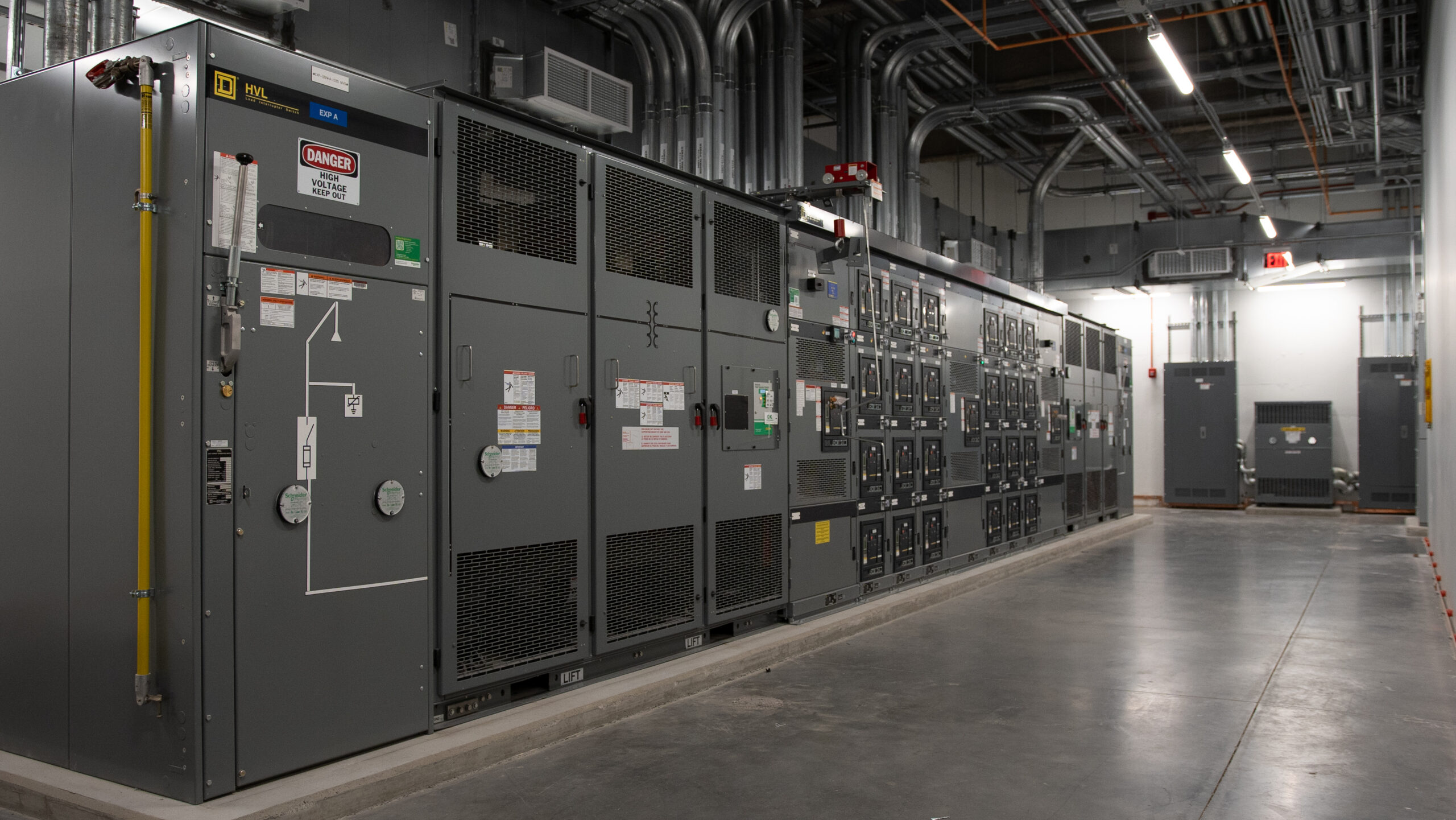
- Power & Distribution: Installation of a new 5,000‑amp service fed from an adjacent substation, along with complete electrical gear, switchgear, and distribution systems to support a fully loaded research facility.
- Emergency Power Systems: Installation and coordination of two rooftop emergency generators, integrated into life‑safety and mission‑critical building functions.
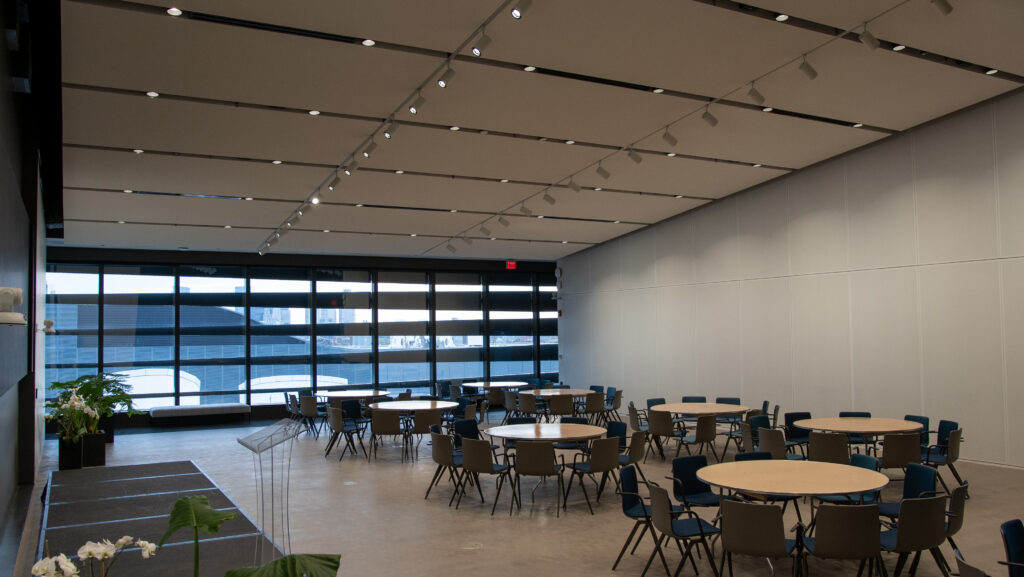
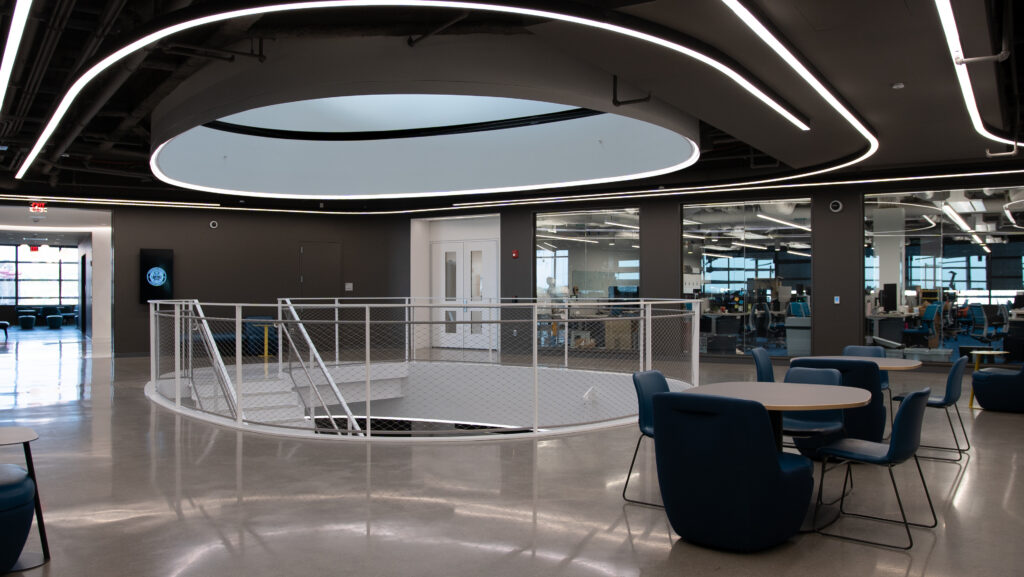
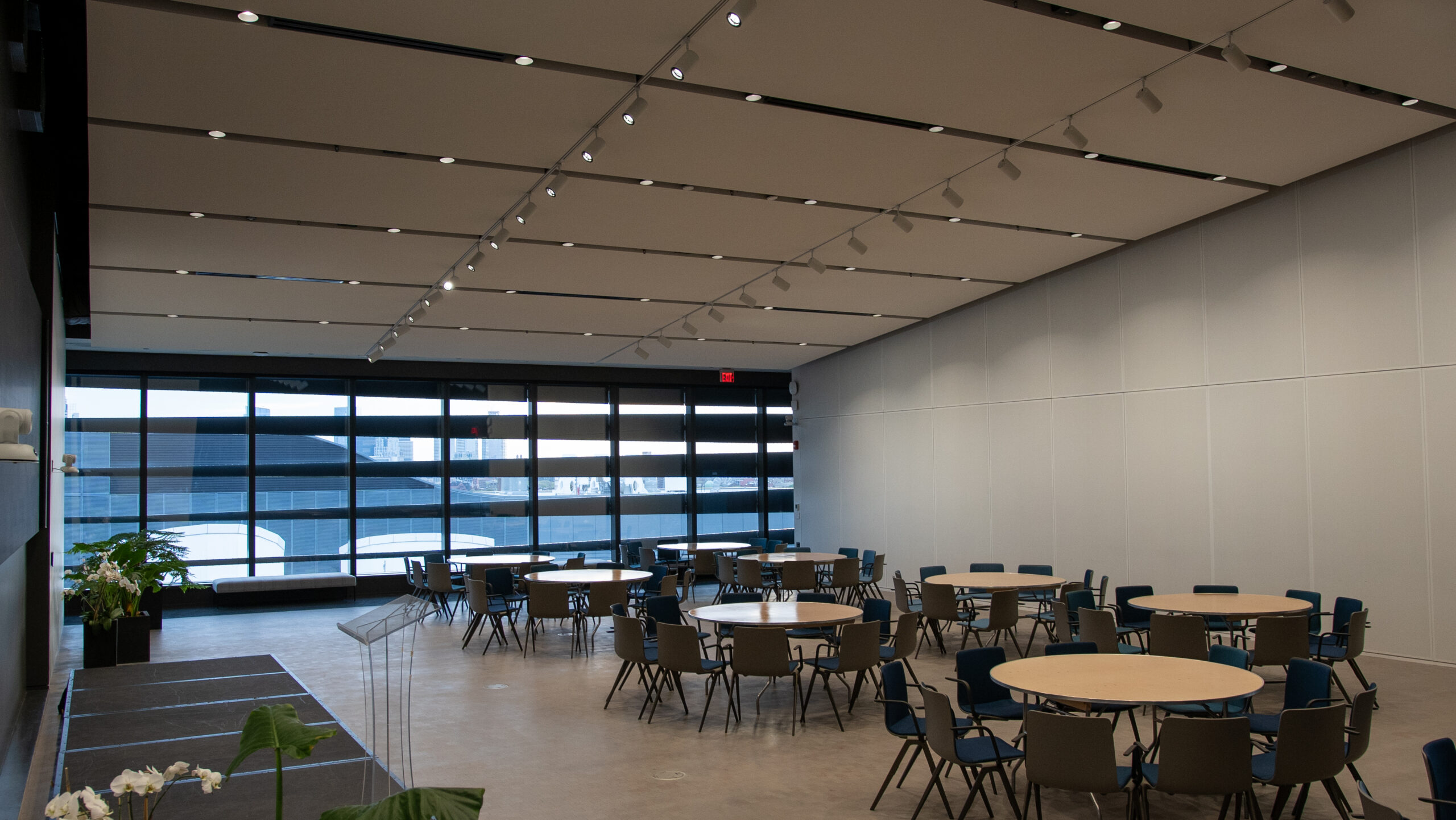
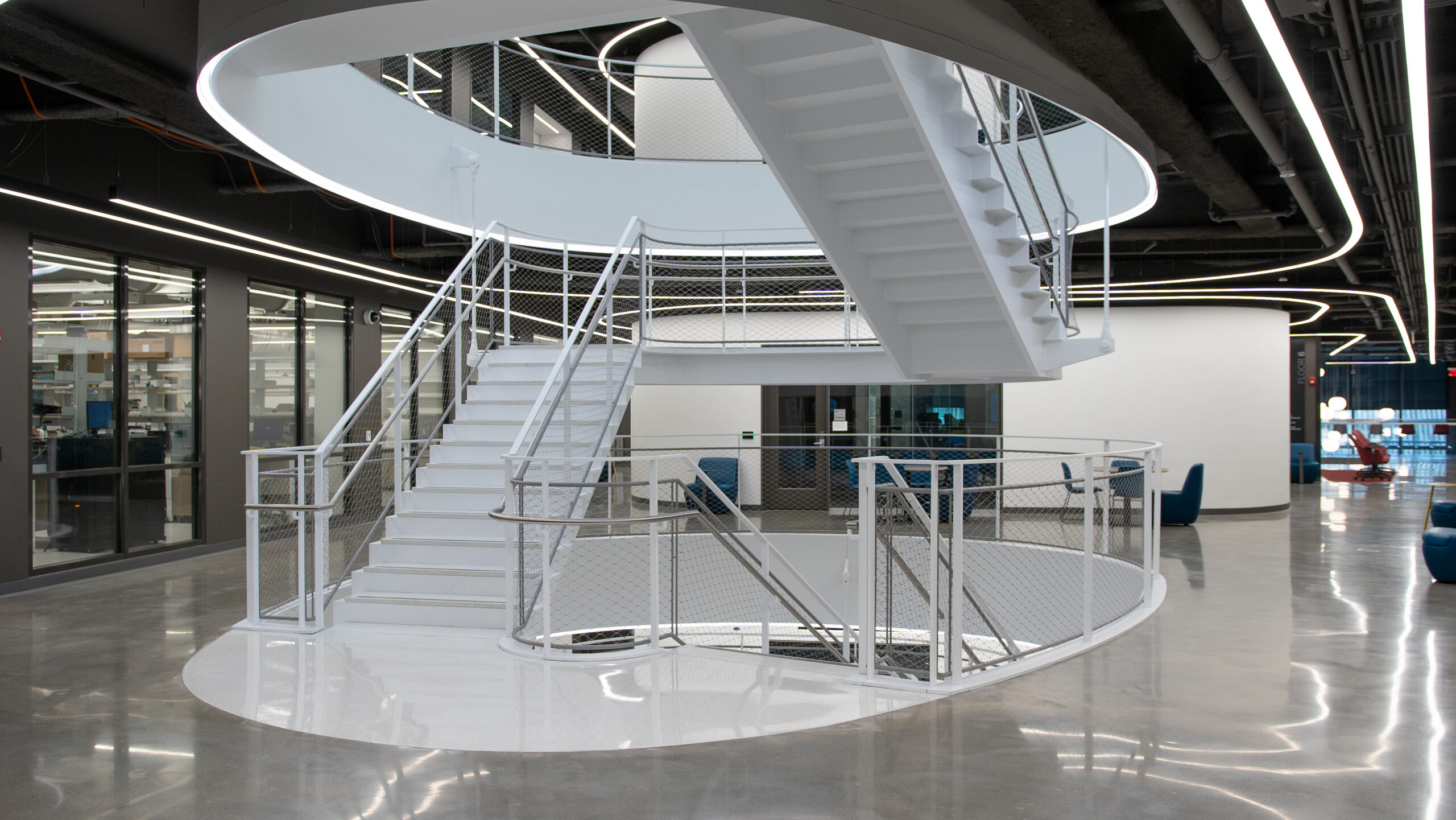
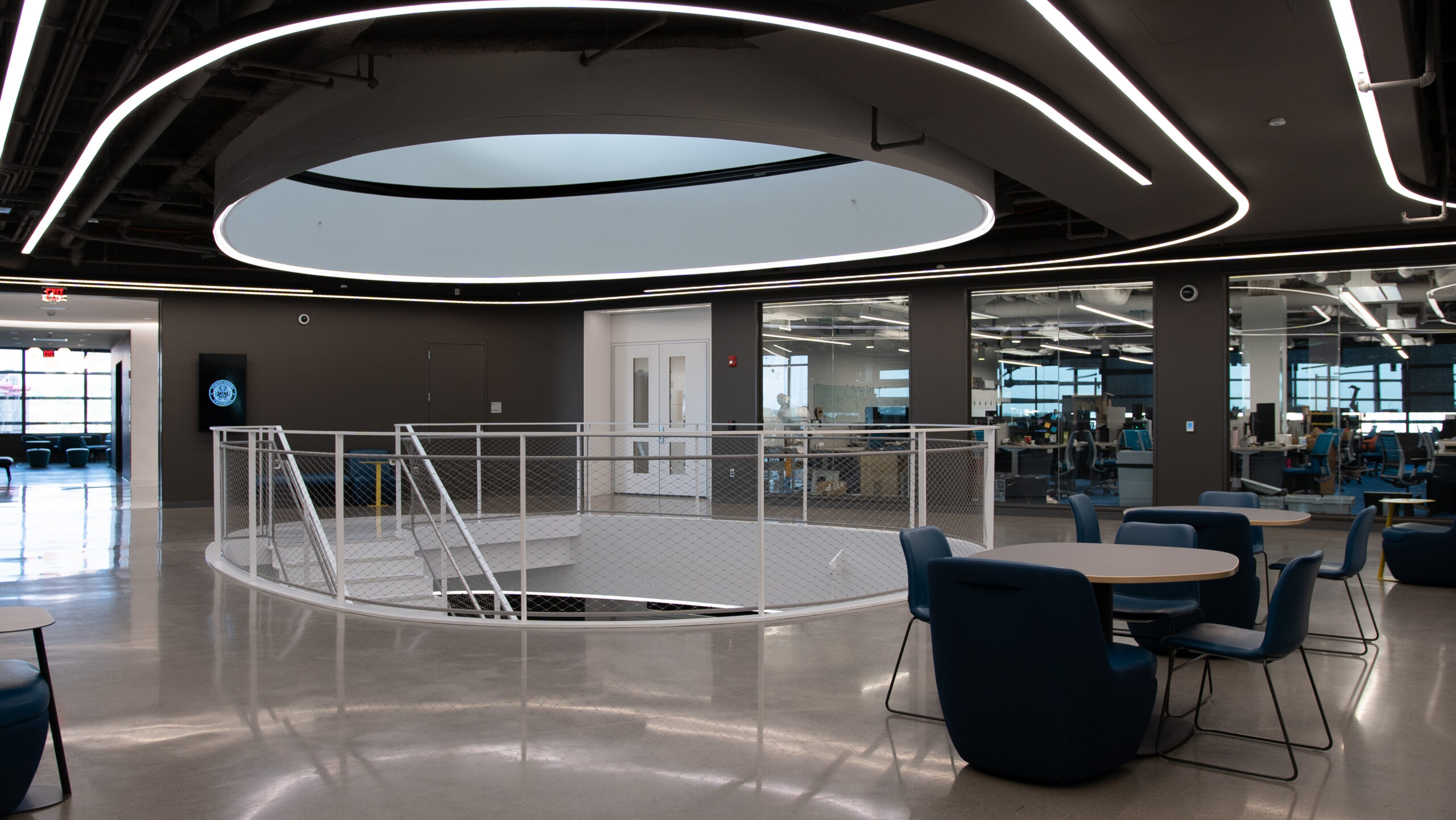
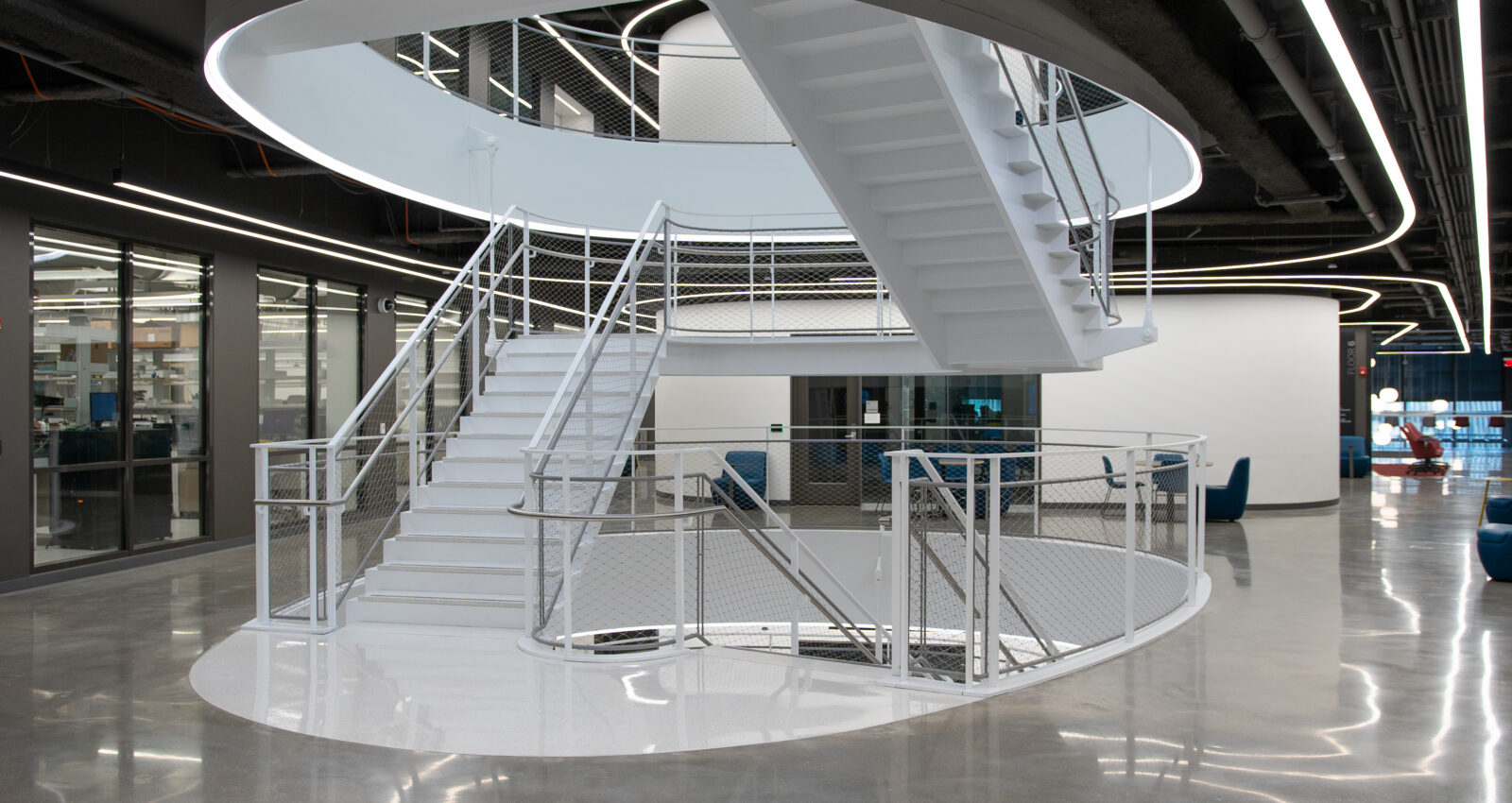
- Lighting Systems: Deployment of 15,000+ linear feet of custom linear lighting, much of it installed along curved architectural walls requiring extreme precision in dimensioning, support layout, and wiring methods.
- Lighting Controls: Integration of a complex Lutron lighting control system, supporting highly flexible lab, teaching, and collaboration environments.
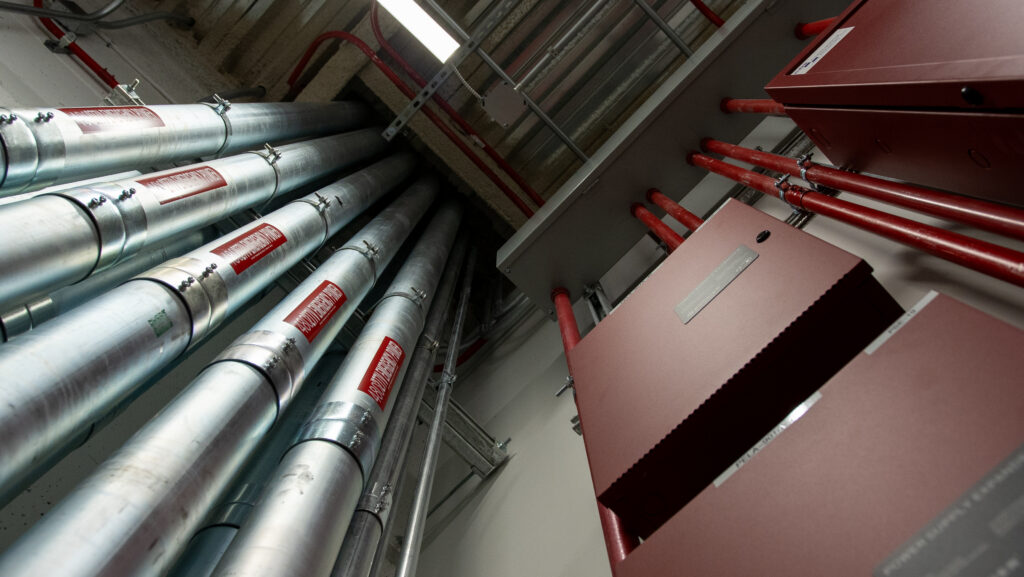
- Fire Alarm System: Complete furnishing and installation of a new fire alarm system throughout all lab floors, engineering spaces, public areas, and mechanical rooms.
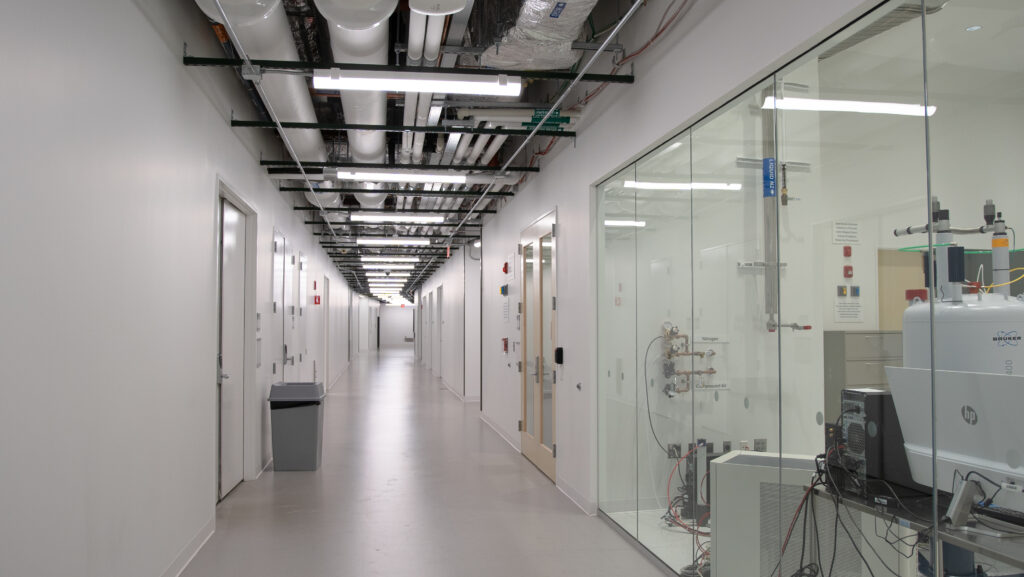
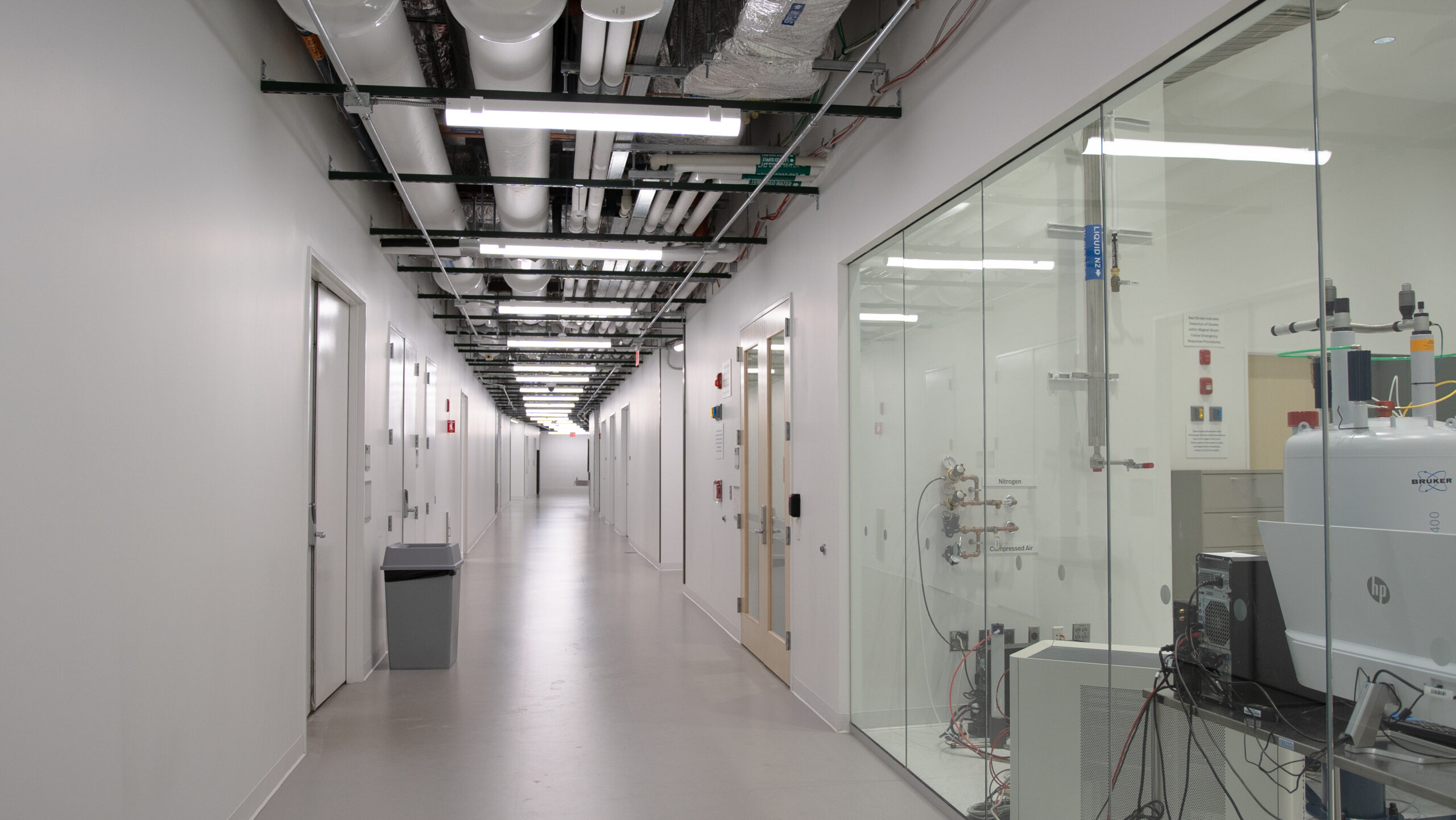
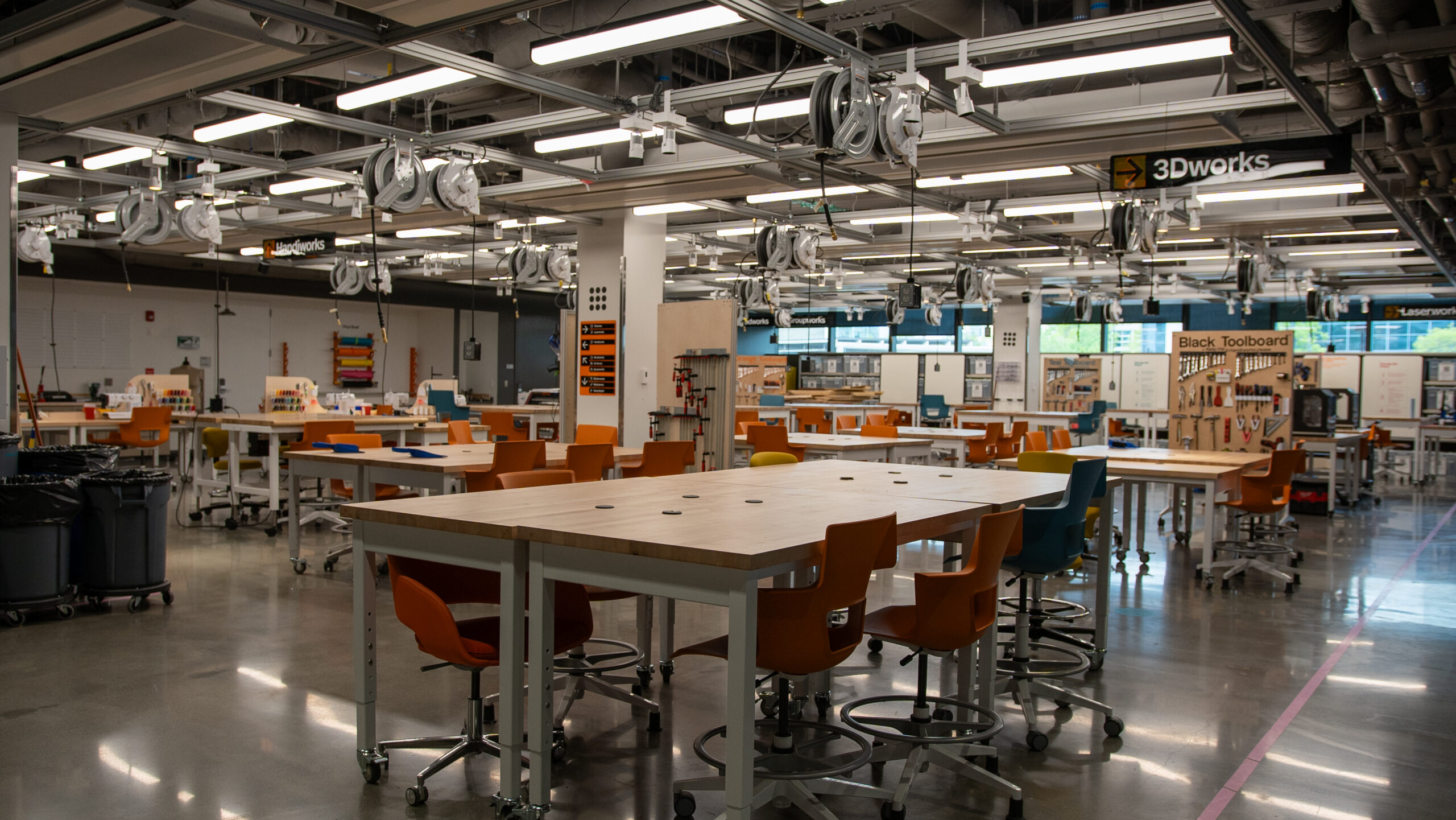
- Lab & Makerspace Infrastructure: Full electrical fit‑out for advanced lab environments, robotics shops, and Northeastern’s makerspace—including specialty equipment power, mechanical system feeds, and technical distribution.
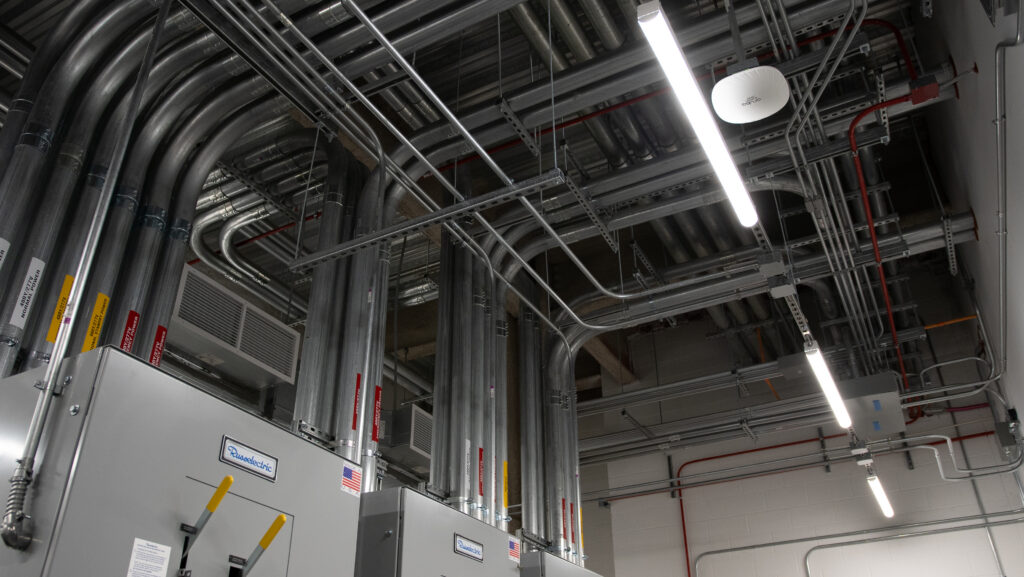
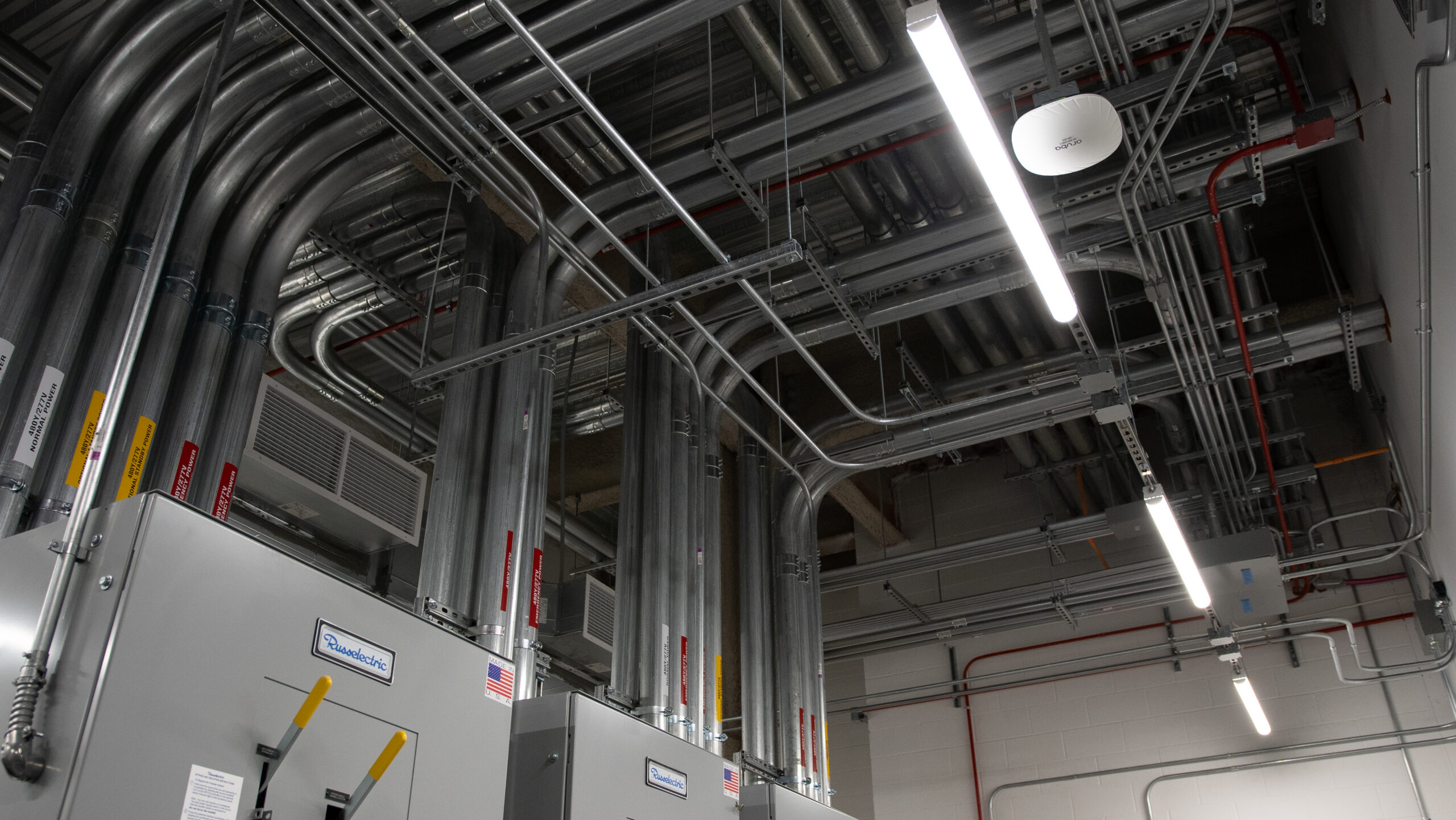
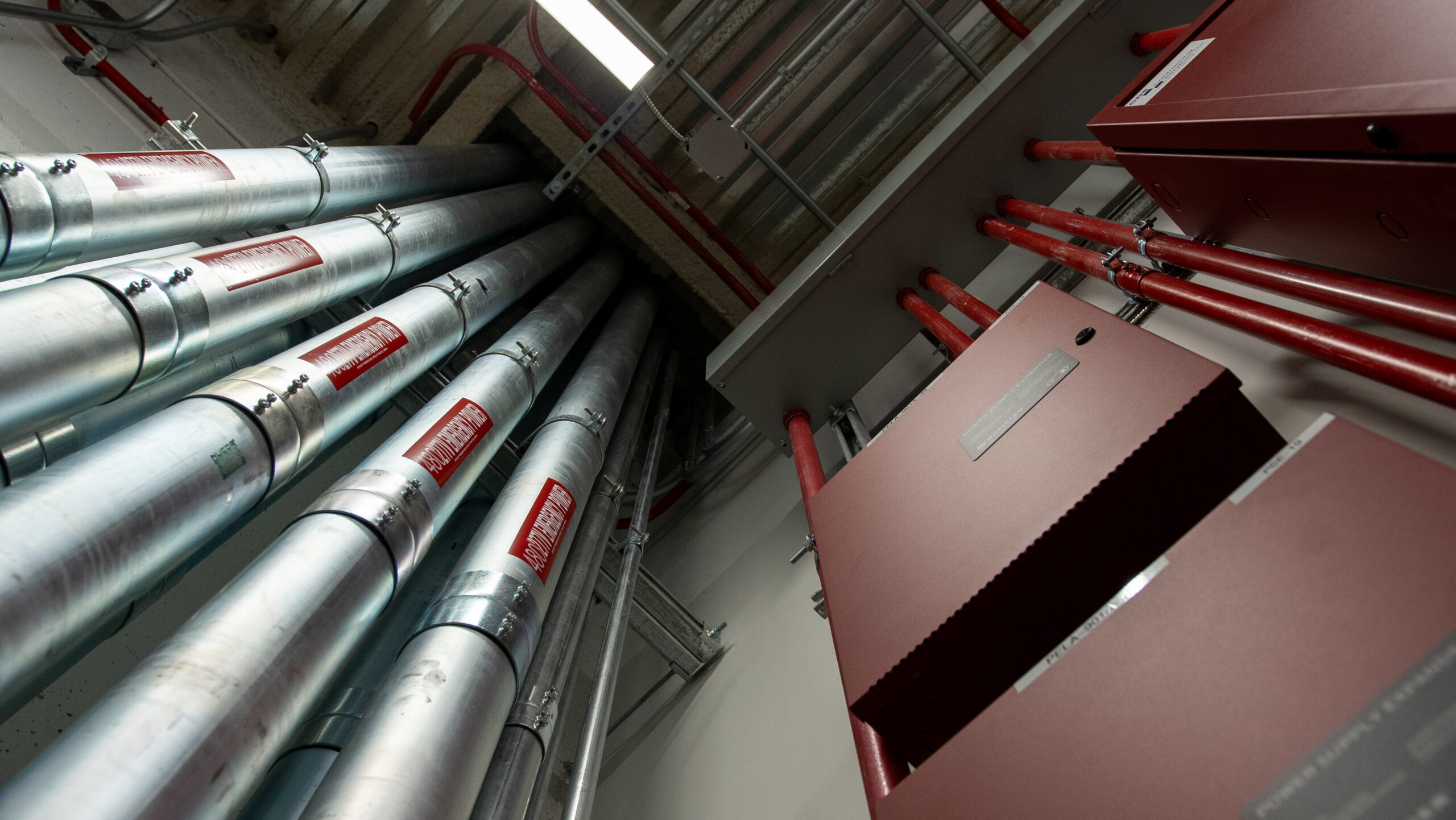
- Prefabrication & 3D Coordination: Extensive use of prefabricated conduit racks, CAD coordination, and Trimble layout, enabling racks and piping to be installed before switchgear delivery and prior to the building being weather‑tight.
Special Challanges
The team executed an extremely complex electrical build during the height of the COVID‑19 supply‑chain crisis. With no option for under‑slab conduits, dense electrical routing in basement and mechanical areas required detailed coordination. Material delays demanded continuous vendor management to maintain schedule. Additionally, the project’s extensive curved linear lighting required perfect dimensional accuracy with no margin for error.
Through strategic prefabrication, detailed CAD coordination, and precise layout, the electrical installation met the project’s demanding architectural, technical, and fast‑track schedule requirements.